Why Traders Fail to Turn Up
If I were to try to describe the relationship between the market and traders, I would term it symbiotic. Unfortunately, too many traders try to ascribe some emotional structure to this relationship. It is It is neither confrontational nor aggressive, and neither party has any personal responsibility to the other.
Each party’s obligation is completely internal. It is the job of the market to continuously provide opportunities, and it is the job of the trader to either accept or reject these opportunities. And it is in this interplay that problems arise that slowly kill trading accounts.
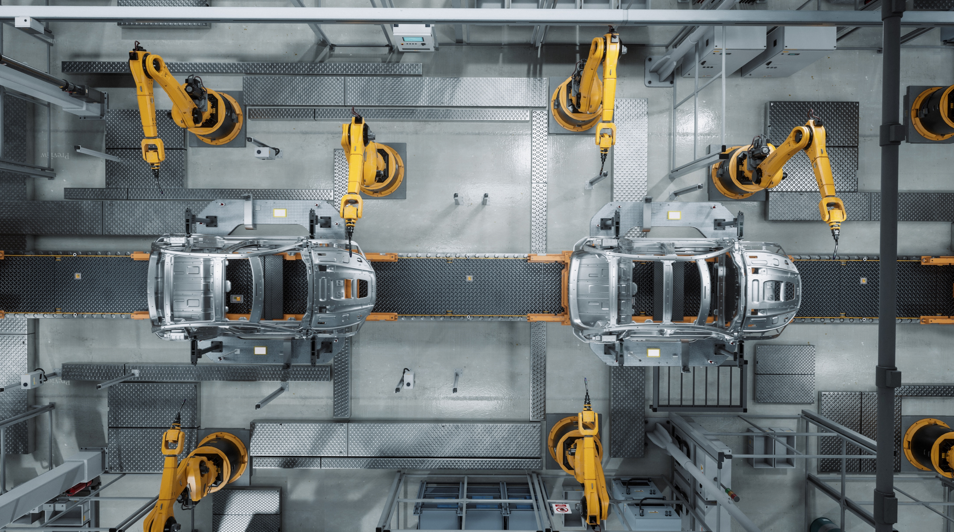
 Traders simply fail to show up – it is not the big blow up that most expect when looking at the death of an account, but rather an emotional inertia that means that when opportunities are presented, they are not taken. In part, I think this comes about because traders fail to appreciate that trading is a job – you turn up day after day and do the same thing over and over again. Many expect that trading will be a relief from their daily lives that are already full of an often mind-numbing set of routines. It is not; trading is a production line.
 On a production line, you do the same thing day in and day out. If there is a unique feature to the relationship between trader and market, it is that you can assign a true cost to not turning up. You can calculate exactly how much your behaviours have cost you.
Recently, I have been reviewing traders’ results as a function of being a member of our Boardroom, and one thing stood out – the market rewards attendance.
Lack of Routine Is a Profit Killer
I have included a table below of the top 10 YTD performing shares on the local market.

The local market has produced some extraordinary opportunities, yet the majority of traders have captured only a fraction of that potential. Not because the method was wrong — it was working beautifully — but because the trader wasn’t there when the opportunity appeared.
The single most common reason given for missing trades?
The single most common reason given for missing trades?
“Didn’t run scans that week.”
It sounds trivial, but it’s not. Those missed scans amounted to over 2,000 percentage points of lost opportunity across the dataset. When you add in “Didn’t calculate” and “Didn’t commit,” the total swelled to nearly 9,000 points of vanished profit.
This isn’t bad luck. It’s behavioural decay — the kind that creeps in quietly and drains performance bit by bit.
Why Traders Stop Turning Up
It’s tempting to think this happens because of laziness or lack of discipline. But in truth, the roots go deeper — into psychology, identity, and emotion.
1. The Fear of Facing Reality
Sometimes traders don’t scan because they don’t want to see what’s there.
A string of losses or a cold streak can make even seasoned traders subconsciously avoid the screen. They tell themselves they’re “taking a break,” when in reality they’re avoiding feedback — the one thing that could help them improve.
Avoidance becomes emotional protection. “If I don’t scan, I can’t be wrong again.”
But markets don’t care about your feelings. They reward only participation.
2. The Erosion of Meaning
Trading starts as a passion, but over time, repetition dulls the edge. Scanning becomes mundane, like brushing your teeth — necessary, but not exciting.
The problem is that routine feels boring, and boredom feels like stagnation. Yet paradoxically, consistency through boredom is what produces growth.
This is where maturity separates professionals from dabblers.
Professionals understand that meaning isn’t found in excitement — it’s found in process. They scan because it’s what the job requires, not because they feel like it
3. Decision Fatigue and Overload
Modern traders live in constant noise — headlines, social media, alerts, notifications.
By the time they sit down to run their scans, mental bandwidth is spent. It’s easier to rationalise skipping the process than to engage deeply.
But every skipped scan is a micro-decision that reinforces the wrong habit: indifference.
A good system removes decision fatigue. You don’t decide to trade; you follow the plan. You don’t decide to scan; you scan because it’s time to scan, and that’s what professionals do.
4. Indifference Masquerading as Calm
Some traders mistake detachment for discipline. They tell themselves, “I’m not forcing trades; I’m staying patient.”
But often, this is indifference — the slow slide from curiosity to apathy.
When fear and fatigue blend, indifference creeps in. And once a trader stops caring enough to do the basics, the game is already lost.
Routine Is An Edge
 The irony in all this? The technical methods work. Volume-based scans, breakout triggers, and trend-following logic all performed exactly as they should. The problem isn’t in the model — it is in the operator
Trading Is a Job — Not a Hobby
 This is the message many traders resist. Trading isn’t a side hustle, an adrenaline hit, or an outlet for creativity. It’s a profession — one that demands structure, repetition, and accountability.
You wouldn’t expect a surgeon to operate “when inspired” or a pilot to check instruments “if they feel like it.” Yet traders often approach their craft with exactly that mindset.
When you understand that trading is a job, scanning the market becomes your version of clocking in.
You’re paid not for brilliance, but for consistency.
You’re rewarded not for excitement, but for presence.
The market doesn’t need you to be extraordinary — it just needs you to turn up.
The Final Word
 Your edge isn’t your indicator, your chart setup, or your algorithm. Your edge is showing up every single day, regardless of mood or outcome.
The greatest profit killer in trading isn’t poor analysis — it’s absence.
Every day you don’t turn up, you tax your future equity curve.
Turn up. Run the scan. Follow the plan.