

Why Your Strategy Isn’t the Reason You’re Losing Money
The Hook: The Trader’s Paradox
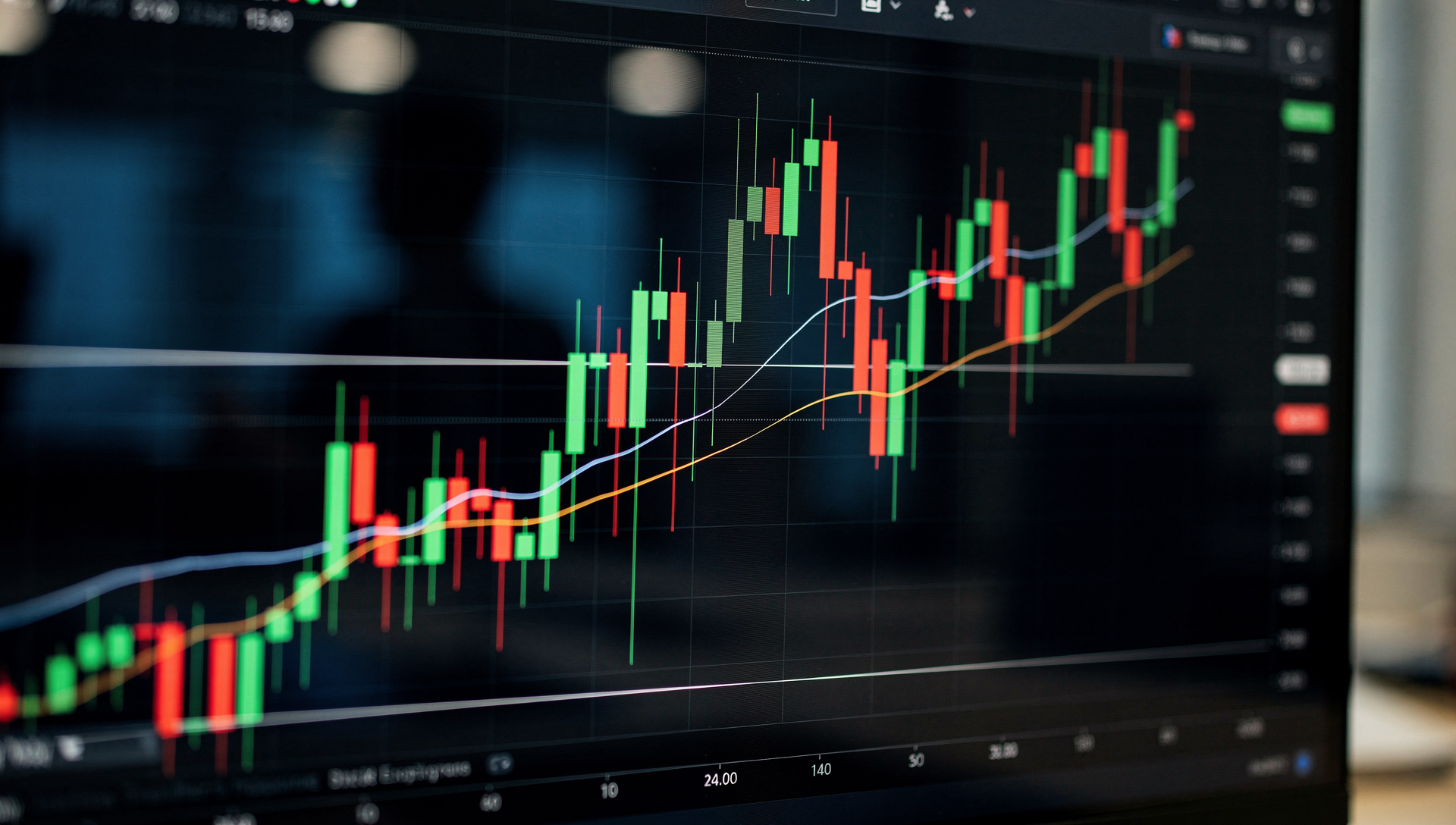
 The amateur’s fatal error is the belief that a better indicator, a faster data feed, or a more complex algorithm will finally bridge the gap to profitability. But for most, the problem isn’t the strategy; it’s the execution.
The driver is always the problem.
Takeaway 1: Your Subconscious is an Identity-Matching Engine
 Your subconscious mind is not a profit-seeking machine; it is an identity-matching engine. Its primary directive is consistency, not wealth. If you harbour a deep-seated identity—perhaps “I am someone who struggles” or “I always give back my gains”—your subconscious will hijack your trading to ensure your bank account matches your self-doubt.
It is a startling realisation that your brain isn’t trying to lose money; it is simply trying to be “right” about who you think you are. It prioritises the safety of your internal blueprint over the uncertainty of a winning streak. If your P&L starts to outpace your self-image, your internal autopilot will trigger self-sabotage to return you to the “comfort” of your previous level.
“Your results rarely rise above your identity. Change your inner world, change your trades.”
Takeaway 2: You Are Running Two Different Systems
 Professional trading requires managing two distinct systems. The first is your Trading System—the hardware of your business, consisting of entry rules, exits, and position sizing. The second is your Operating System (OS)—the invisible mental software that determines whether you actually have the capacity to run that hardware.
A mediocre strategy running on a high-performance Mental OS will generate wealth, while a “Holy Grail” strategy running on a broken OS will inevitably fail. This Mental OS is comprised of the core “software” components required to build a trading edge:
- Patience: The ability to wait for the market to meet your criteria. Patience is free
- Discipline: The adherence to your own rules.
- Emotional Control: Decoupling your self-worth from the outcome of a trade.
- Consistent Execution: Performing the same actions regardless of recent wins or losses.
- Long-Term Mindset: Prioritising the next 1,000 trades over the next five minutes.
Takeaway 3: Stop Visualising Money; Start Rehearsing Behaviour
 The most dangerous advice in trading is to “visualise your dream life.” Elite performers—from trauma surgeons to fighter pilots—don’t spend their time visualising the victory parade; they engage in rigorous mental rehearsal of the process.
A critical component of this rehearsal is Recalling Your Wins, but not for the sake of the profit. You must mentally revisit a trade you executed perfectly—one where you followed every rule and managed the risk without hesitation. By reliving that specific scene, you anchor your current identity in past success, reinforcing the process over the outcome.
You are not celebrating the money; you are reinforcing the “Behavioural Identity” of a professional.
“The subconscious responds more effectively to believable behavioural identities than to extravagant financial fantasies.”
Takeaway 4: The Physiology of Rewiring (Relax and Reset)
 You cannot rewire a brain that is in “survival mode.” When you are stressed, your sympathetic nervous system takes over, shifting you into a reactive, “fight or flight” state where learning is impossible. This is why the “Relax and Reset” phase is a technical necessity for any trader.
By consciously slowing your breath and releasing tension in your jaw and shoulders, you trigger a parasympathetic shift. You will know your nervous system has moved into a receptive state when you feel a distinct tingling sensation in your palms and a profound slowing of your internal clock. Only in this calm, focused state can the Mental OS be updated.
Takeaway 5: Adopt the Identity of the Trader You Intend to Become
 Improvement begins by aligning your thinking with the standards of the trader you want to become. During mental rehearsal, create a clear and detailed image of your future trading self.
Observe this version of yourself objectively. Notice how they approach the market without urgency or emotional attachment. They ignore low-quality opportunities, allocate risk consistently, and add to winning positions according to predefined rules rather than emotion.
Their discipline is not the result of willpower. It is the natural consequence of established habits and a well-defined professional identity.
Repeated mental rehearsal reinforces this identity. Over time, disciplined execution becomes less dependent on conscious effort and more reflective of your normal decision-making process.
Takeaway 6: The “Real Goal” is Character, Not Prediction
 The market does not pay you for your ability to predict the future. The real goal of professional trading is becoming a person who can execute an edge with total consistency in an environment of total uncertainty.
This character is built through a series of “Small Wins” that serve as votes for your new identity:
- One decision: Making a single choice based on rules rather than impulse.
- One journal entry: Documenting the process, regardless of the P&L.
- One perfectly executed loss: Accepting the risk and walking away.
- One disciplined winner: Letting a trade unfold without interference.
The One Question That Matters
Many traders spend years searching for better chart patterns while neglecting the decision-making process that determines whether those patterns are traded consistently. They invest heavily in software and analysis, but very little in developing the mindset required to execute their edge.
A useful question to ask each day is simple: Am I investing as much effort in improving my decision-making as I am in improving my trading system?
A trading strategy defines what to do. Your mindset determines whether you do it consistently.
Over the long term, the quality of the trader is usually more important than the quality of the strategy.




Thanks for this one mate!
Legend.